Proxmox Storage: ZFS vs LVM-thin vs Ceph (2026 Guide)
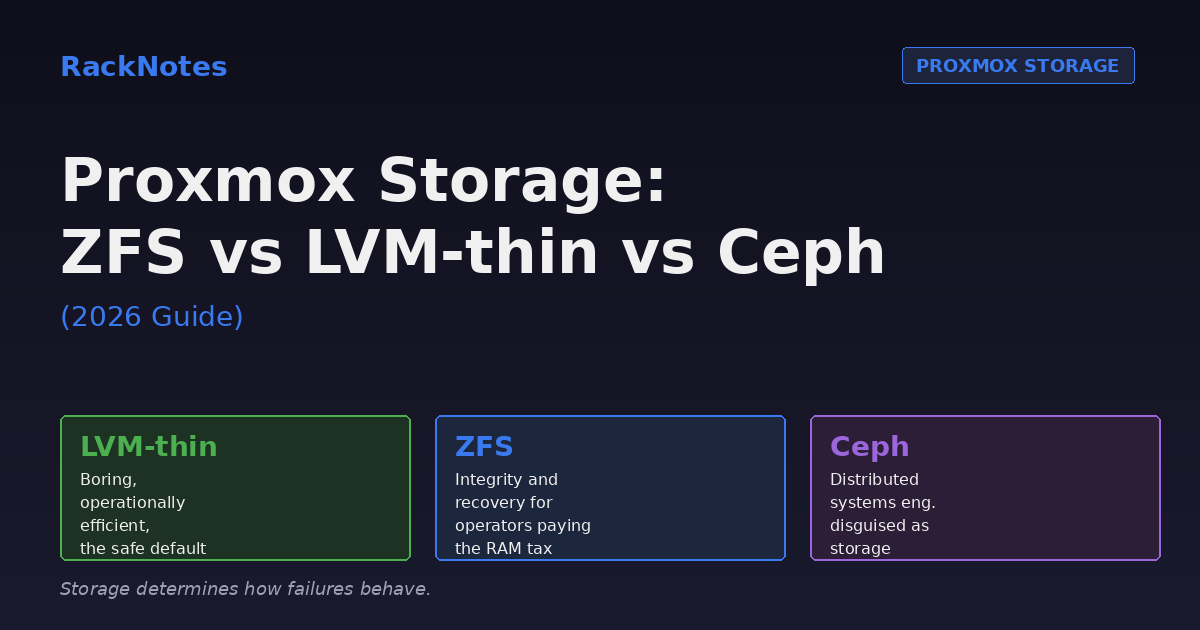
12 min readProxmox storage decisions — ZFS, LVM-thin, or Ceph? Operator-focused guide to tradeoffs, failure modes, hidden migration costs, and what installer docs don’t tell you.

12 min readProxmox storage decisions — ZFS, LVM-thin, or Ceph? Operator-focused guide to tradeoffs, failure modes, hidden migration costs, and what installer docs don’t tell you.
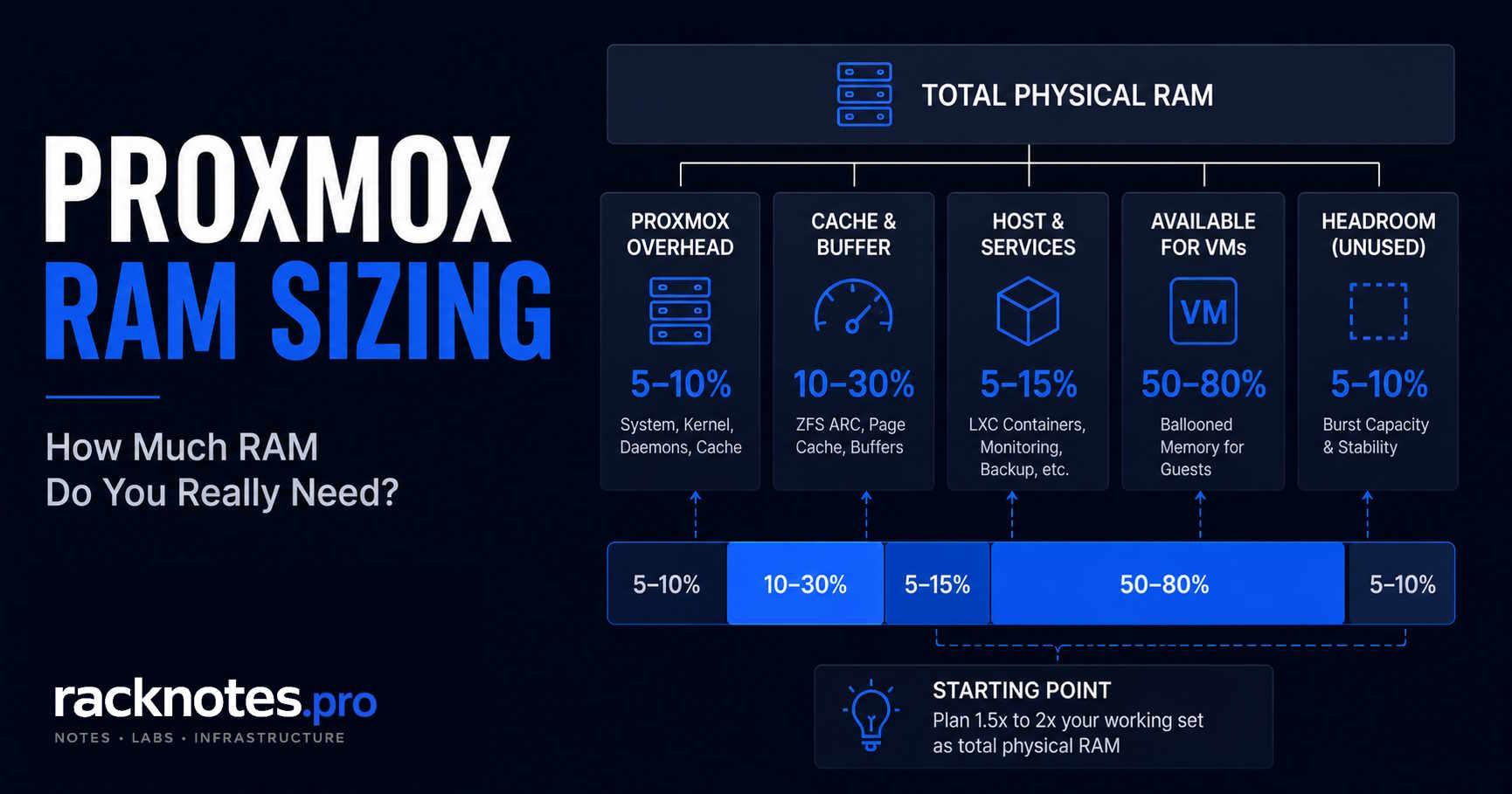
9 min readProxmox has no software RAM limit — the ceiling is your hardware. This guide covers ZFS ARC sizing, per-VM allocation, ballooning tradeoffs, and how much RAM your workload actually needs.
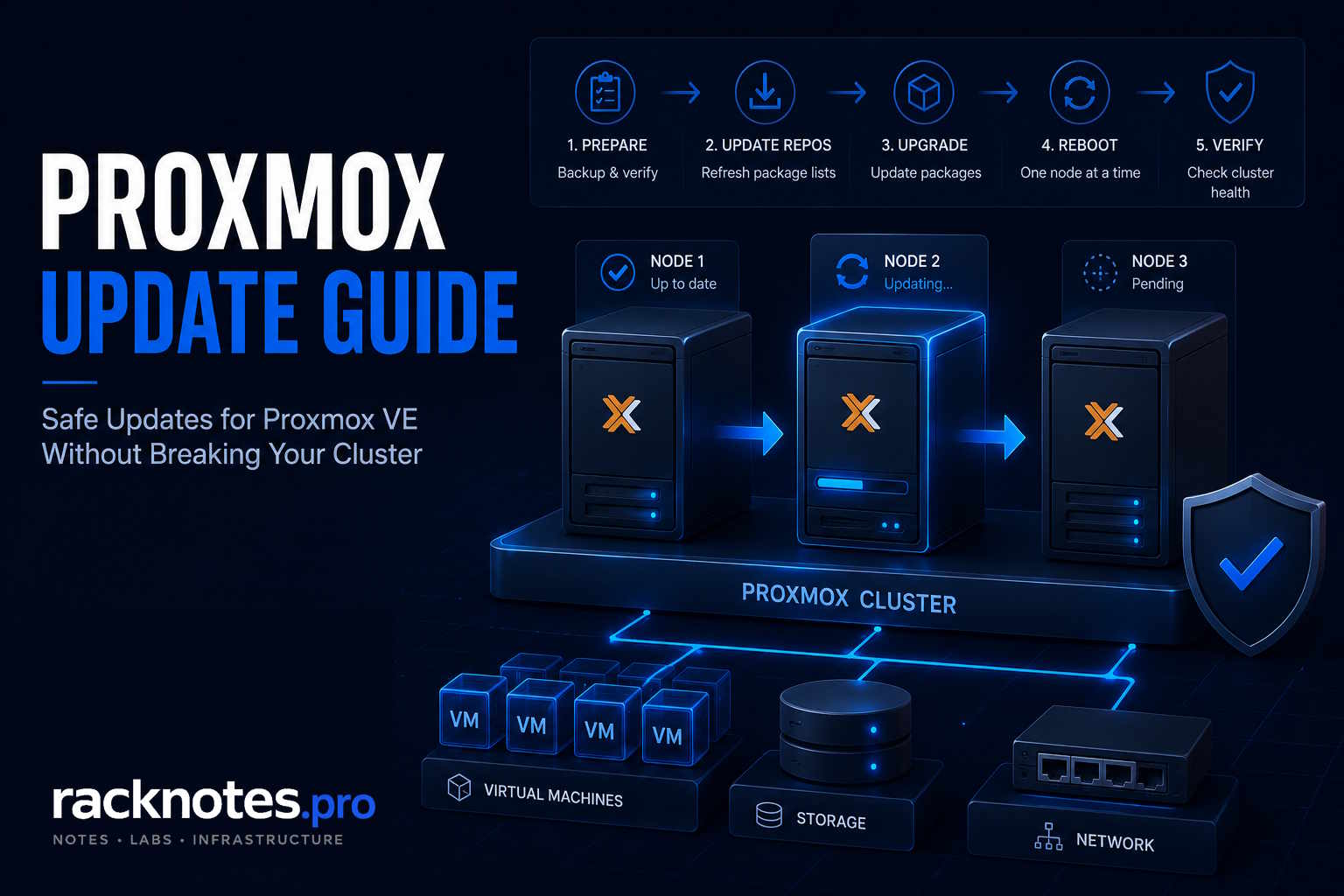
10 min readProxmox updates are mostly safe — until the first reboot. Practical guide to update timing, pre-checks, kernel reboot decisions, cluster sequencing, and recovery.
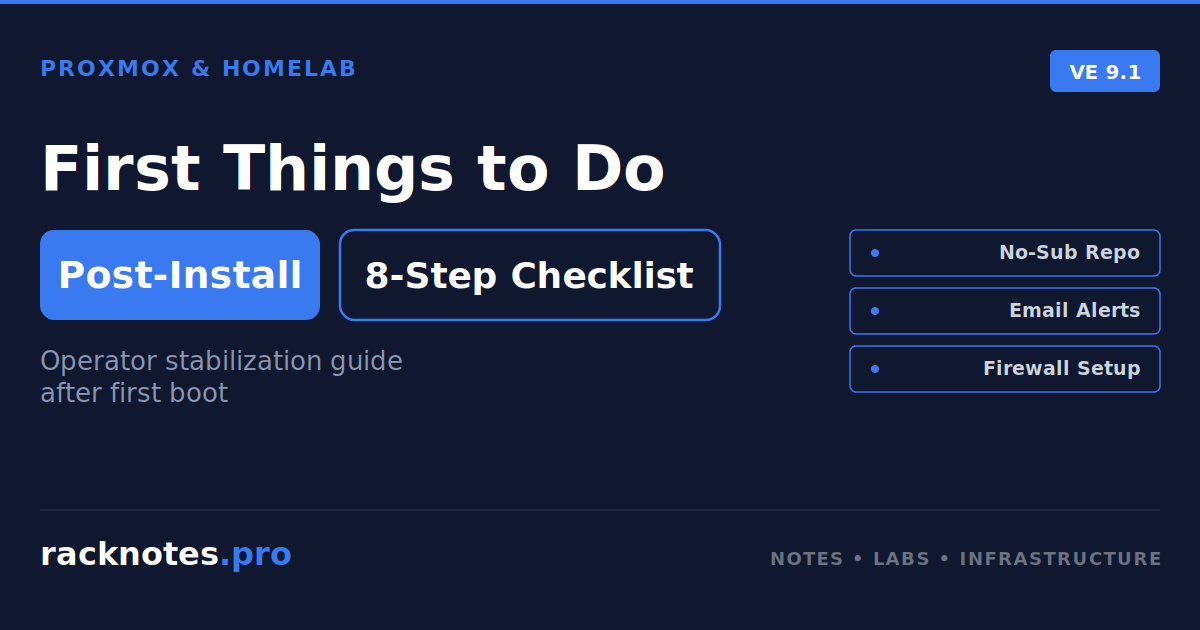
8 min readPractical Proxmox post-install checklist for homelab operators: switch to no-subscription repo, suppress nag popup, run updates, verify time sync, configure email alerts, enable firewall safely, back up /etc/pve, and decide what to do about IPv6. Plus why snapshots are not backups, and why you shouldn’t expose port 8006 to the internet.
9 min readPractical step-by-step guide on how to install Proxmox VE 9.1 on bare-metal hardware. Covers BIOS prep, ISO verification, USB creation, the ZFS vs LVM-thin decision matrix, network configuration with FQDN, and the 5 most common first-time installation mistakes that show up repeatedly in Proxmox forum threads.
14 min readBest mini PC for Proxmox guide for 2026: real-world IOMMU and NIC issues, BIOS pre-flight checklist, thermal and acoustics gotchas, plus specific model picks for budget, mid-tier, and cluster homelab use. No affiliate links — just operational reality from forum reports and community testing.
13 min readESXi to Proxmox migration explained from the operator side: the vmxnet3 to VirtIO trap, real Windows boot errors (INACCESSIBLE_BOOT_DEVICE, 0x0000007B), ZFS ARC sizing gotchas, and recurring pitfalls from forum threads. Includes pre-migration checklist and FAQ.
7 min readProxmox VE in plain terms: Debian-based hypervisor with KVM, LXC, and clustering — fully free under AGPL v3. What it is, what it isn’t, and where it fits in homelab and SMB deployments.
16 min readESXi Free is back in 2026, but Proxmox VE has become the default for anything beyond a single host. Real comparison of features, cost, trust, and when each one actually makes sense after Broadcom.